
Email Journey Automation: Guide Every Customer From First Click To Repeat Order
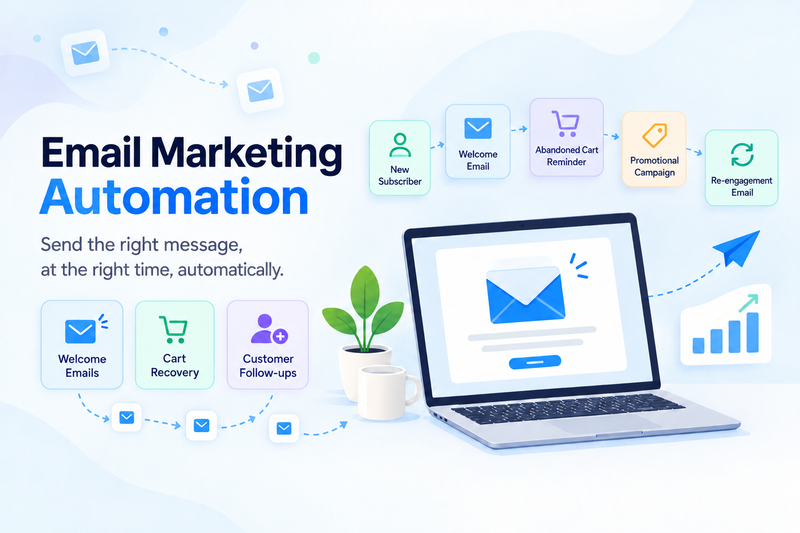
Customers very rarely buy in one clean straight line. They visit, leave, return, read a review, hesitate and finally decide, often over several weeks. Yet many businesses treat each email as a separate event, with no sense of where the person has been or where they might go next. That blind spot leads to repeated offers, mistimed reminders and messages that miss the point.
Looking at the whole path changes the approach. Email journey automation maps the stages a customer moves through, from discovery to first purchase to loyalty, and attaches the right message to each stage. When a person moves forward, the emails move with them. When they stall, a gentle nudge appears. Nobody has to track these changes by hand, because the system watches for them.
The result feels less like a series of broadcasts and more like a helpful guide walking beside the customer. Customers rarely notice good journey design, but they feel its absence immediately.
Why Thinking In Journeys Pays Off
Different stages need different messages. A stranger needs an introduction, a browser needs reassurance and a buyer needs support. Sending the same offer to all three wastes the opportunity and risks pushing the wrong message at the wrong person.
A journey view also reveals gaps. Many stores discover that they say plenty at signup and almost nothing after the first order. Seeing the whole path clearly makes those missing moments obvious and easy to fix. Closing even one gap can lift repeat purchases noticeably.
Signs You Are Using Strong Email Journey Automation
Use these five checks as a guide.
A Visual Map
You should be able to see every stage, branch and message on one screen, which makes planning and teaching others far easier. A clear picture prevents the confusion that grows when automations are scattered across different places.
Behavior-Based Movement
Customers should move between stages based on what they do, such as buying, clicking or going silent. Movement based on action keeps messages honest and timely.
Goals And Exits
Each journey needs a defined goal. When a customer reaches it, they should leave that path automatically. This avoids sending sales messages to people who have already converted.
Cross-Channel Support
Journeys work best when email can be joined by other channels at the right moments. A short text or push alert can rescue a journey that email alone would lose.
Stage Reporting
You should see how many customers sit in each stage and how long they stay there. Long waits often show where customers lose interest.
Journeys To Map First
New subscriber journey from signup to first purchase
First-time buyer journey from order to second purchase
Browse and cart journey for visitors who show interest but do not buy
Loyal customer journey that rewards repeat buyers
Lapsed customer journey that wins back people who have faded away with a friendly reminder of what they loved
Designing Journeys That Feel Natural
Start With The Customer's Goal
Ask what the customer is trying to achieve at each stage, then write emails that help them do it. Your goals will follow, because helped customers tend to buy more and stay longer.
Use Real Signals
A click on a product or a visit to the pricing page tells you far more than a guess. Let those signals decide what comes next. Fewer assumptions mean fewer irrelevant emails.
Keep Paths Simple At First
Three or four stages are plenty for a start, and they keep the whole team able to understand the plan at a glance. Complex maps are easy to draw and hard to maintain. You can always add branches once the basics are working well.
More Relevant Follow-Up And Fewer Unsubscribes
Businesses that plan journeys often notice that follow-up gets more relevant, since each message reflects the customer's real situation. Relevance usually raises engagement and lowers unsubscribes.
Planning also improves teamwork. Marketing, sales and support can look at the same map and agree on who owns each stage, which reduces overlapping or conflicting messages. Customers then receive one consistent voice instead of several competing ones.
A Platform Built Around Real Customer Behavior
Basic tools can send emails on a fixed schedule. If you want a visual map, behavior-based movement and support for popup, push and WhatsApp messages in the same flow, a platform like Adflipr offers email journey automation designed around what customers actually do.
Draw Yours
Pick the first purchase as your main goal for now. Draw the steps a shopper takes to reach it, from the first visit to the checkout page, then add one email at the stage where most people stall. Launch it, watch the results closely and extend the map from there. Over time, the path fills in.
One Story
Customers experience your brand as one continuous story, not a pile of separate emails. Email journey automation helps you tell that story well, with the right message at every step of the path.
Comments
No comments yet. Be the first to comment!